Leave Your Message
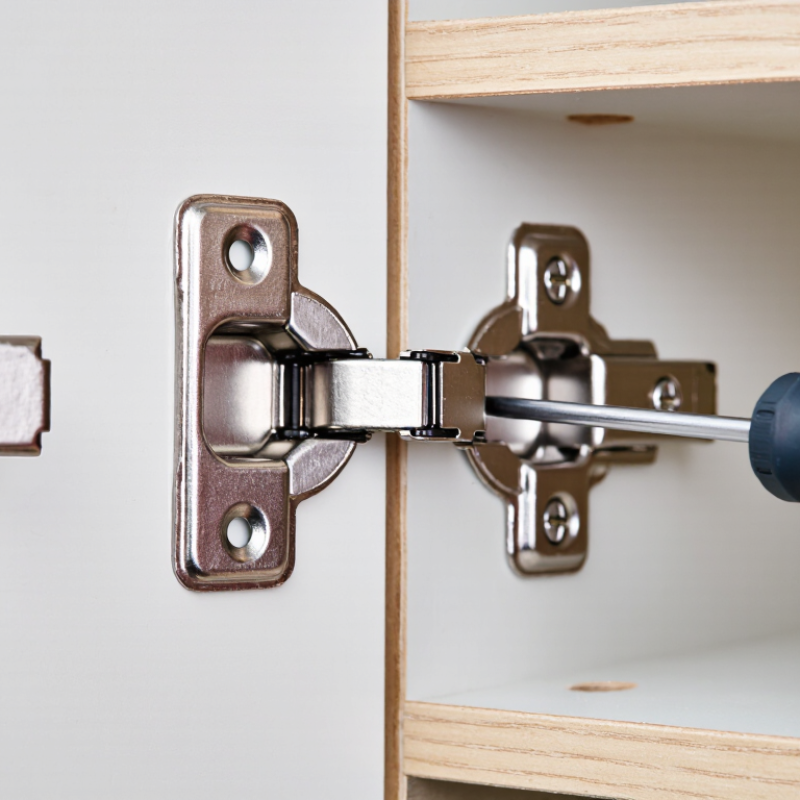
A cabinet door that slams, rubs against its frame, or hangs unevenly may need hinge adjustment. With 3D soft-close hinges, small changes to the hinge settings can affect the door’s height, side-to-side position, and distance from the cabinet. The exact screws and adjustment range vary by hinge model, so check the manufacturer’s instructions when available. A screwdriver, good lighting, and a steady hand are usually enough. Keep the door supported while you work.
The term 3d Hinge Soft Closing describes a hinge setup that combines three-way positioning with a damping mechanism. These functions are related, but they are not always adjusted in the same way. Some hinges include a switch or lever to change the closing action; others have a fixed damper. This guide explains how to identify the adjustment points, make small corrections, and test the door after each change. Move slowly. A quarter-turn can be enough. If the door still closes harshly, the problem may involve a damaged damper, loose mounting screws, or a door that is out of alignment—not simply the adjustment setting. It can take a little trial and error, and not every result is immediately obvious. That is worth remembering before turning every screw at once. By observing the gap around the door and listening to its closing action, you can make more controlled adjustments and avoid unnecessary strain on the hinge or cabinet.
How 3D Soft-Close Hinges Control Door Movement
A 3D soft-close hinge manages a cabinet door through three linked actions: positioning, braking, and final closure. Its side, height, and depth adjustments align the door with the cabinet frame. The damper then resists the door’s motion near closing, reducing impact instead of simply pulling the door shut. You can see the difference when a door approaches the frame quietly rather than bouncing against it.
The control is mechanical, not magic. A spring provides closing force, while a damper slows the final movement. Door weight, hinge placement, and alignment all affect how smoothly that happens. EN 15570:2008, the European furniture-hinge test standard, sets methods for assessing hinge strength and durability through repeated operation. It offers a useful testing framework, but it does not guarantee identical closing behavior in every cabinet.
Small adjustments matter. If the door rubs at the top, adjust height in small increments and check the reveal again. If it closes unevenly, inspect depth and side alignment before changing the damper setting. A practical detail: listen for a sharp knock. That sound may indicate misalignment, not a failed soft-close mechanism. And honestly, adjustment can feel less precise than expected; the hinge model and door load both influence the result.
| Adjustment or Feature | What It Controls | Typical Adjustment Method | When to Adjust | Practical Check |
|---|---|---|---|---|
| Side-to-side (lateral) | Moves the door left or right relative to the cabinet, helping even out the gaps between doors and at the cabinet sides. | Turn the lateral adjustment screw on the hinge arm in small increments. The screw location and direction can vary by hinge design. | Door gaps are uneven, adjacent doors rub, or the door sits too close to one side. | Open and close the door, then compare the gaps along the top, middle, and bottom. |
| Height (vertical) | Raises or lowers the door so its top and bottom edges align with neighboring doors or the cabinet opening. | Loosen the mounting-plate screws slightly, reposition the door, and retighten them. Some designs use a dedicated height-adjustment screw. | The door is higher or lower than adjacent doors, or its top and bottom margins are uneven. | Support the door while adjusting and check alignment before fully tightening the screws. |
| Depth (in-and-out) | Moves the door closer to or farther from the cabinet face. This helps the door sit flush and can prevent rubbing. | Use the depth-adjustment screw, or loosen the relevant hinge-arm or mounting-plate screw as specified for the hinge. | The door face sits proud of the cabinet, is recessed, or contacts the cabinet frame as it closes. | View the door from the side and check that it closes without scraping or striking the cabinet. |
| Soft-close damping | Slows the door near the end of its closing travel. The damper absorbs motion; it does not normally set the door’s alignment. | If provided, use the hinge’s damper switch or adjustment control. Some hinges have no user-adjustable damping. | The door closes too quickly, closes very slowly, or the damping feels uneven between hinges. | Test the door from several opening angles. Confirm the damper engages near the end of travel without forcing the door shut. |
| Hinge count and placement | Hinge support affects how the door hangs and how consistently its movement is controlled. | Check that hinges are securely fixed and positioned according to the hinge maker’s installation guidance and the door’s size and weight. | The door sags, twists, or behaves differently at the top and bottom. | Inspect screws, mounting plates, and the door for looseness or damage before making fine adjustments. |
| Adjustment sequence | Combines the three alignment axes while keeping the door’s soft-close action unobstructed. | Make small changes, checking the door after each one. A useful sequence is height, side-to-side, then depth. | Several gaps are uneven or one adjustment changes the appearance of another. | Finish by opening and closing the door several times and checking alignment, clearance, and damping. |
Note: Adjustment screw locations, directions, and available damping controls differ between hinge designs. Follow the hinge’s installation instructions, and avoid overtightening screws.