China’s heavy-duty hardware sector is expanding, but reliable drawer-slide comparisons remain surprisingly difficult. Market research firms, including Grand View Research and Fortune Business Insights, track adjacent furniture hardware and storage-system markets. However, they do not consistently separate Heavy Duty Drawer Slides as an independent category. That gap matters. Buyers may see impressive load ratings, yet miss cycle testing, corrosion resistance, installation tolerance, and after-sales support.
A serious review of China’s top manufacturers should examine more than catalog numbers. It should compare rated loads under stated conditions, steel thickness, ball-bearing design, locking mechanisms, finish quality, and production traceability. ISO 7170 and related furniture durability principles provide useful reference points, although they cannot replace product-specific testing. A 1,000-millimeter slide carrying a tool cabinet behaves differently from one supporting a kitchen drawer. Small details become expensive failures.
Industrial design authority Don Norman offers a practical reminder: “Design is really an act of communication, which means having a deep understanding of the person with whom the designer is communicating.” His statement is not specific to drawer slides, but it fits this market closely. Manufacturers must communicate load limits, mounting dimensions, and service conditions clearly. Otherwise, even a technically strong product can be chosen incorrectly.
This introduction therefore treats manufacturing capability, verified performance, customization, and customer evidence as equal factors. Public data is uneven. Some rankings will remain imperfect. That is worth admitting. The following list focuses on manufacturers that show credible engineering depth, export experience, and measurable quality control, rather than simply repeating the loudest marketing claims.
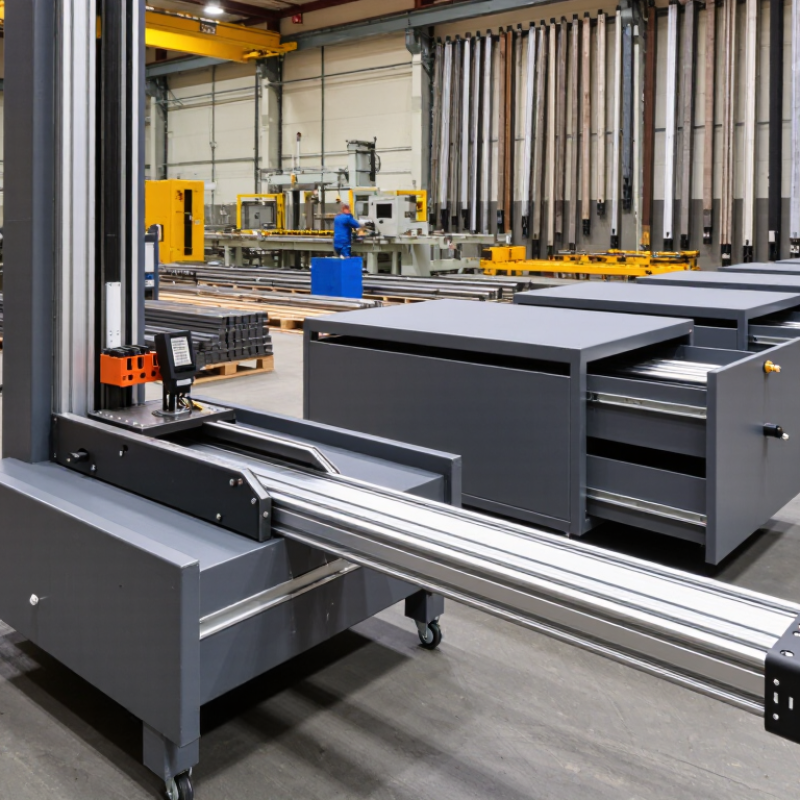
China Top 10 Heavy Duty Drawer Slides Manufacturers
Heavy-duty drawer slides are not defined by size alone. Their practical load ratings commonly range from 100 to 500 kg. A reliable manufacturer should state whether the rating means static or dynamic capacity. It should also identify drawer width, slide length, extension type, and test conditions. A 500 kg claim may apply only to a centered load on a reinforced drawer. Real workshops rarely provide such perfect conditions.
From field installation experience, 100 to 200 kg slides suit tool cabinets, storage compartments, and service vehicles. At 300 kg, frame rigidity becomes critical. At 500 kg, installers need stronger mounting plates, accurate alignment, and controlled opening speed. Small alignment errors can create serious friction. Do not trust the number alone.
When comparing the top ten manufacturers in China, review cycle-test data, material specifications, corrosion testing, and installation guidance. Cold-rolled steel may work for moderate loads, while thicker steel and hardened bearing components support demanding applications. Check whether the rating remains valid after repeated cycles. That detail is easy to overlook. I have also seen oversized slides fail because the cabinet frame flexed under load. The slide was not always the weak point. Load distribution, fastener quality, and floor stability deserve equal attention. A clear technical datasheet is often more valuable than an impressive catalog figure.
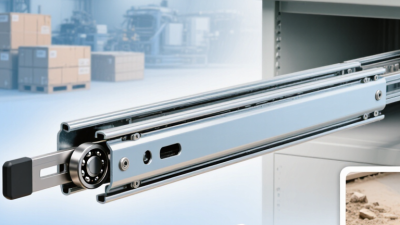
Heavy-duty drawer slides are commonly specified by their rated load capacity. The chart compares representative capacity levels from 100 kg to 500 kg, covering applications ranging from industrial storage drawers and tool cabinets to machinery platforms and heavy equipment compartments. Actual capacity depends on slide length, extension type, installation orientation, mounting method, and load distribution.
China’s top ten heavy duty drawer slide manufacturers differ most in load ratings, cycle life, and material choices. A serious comparison should separate static load from working load. Some slides support 100 kilograms, while reinforced models reach 200 kilograms or more. These figures mean little without drawer width, extension length, and mounting position.
Cycle testing reveals another gap. Better-engineered slides commonly target 50,000 to 100,000 opening cycles. However, laboratory results may not reflect dust, uneven cabinets, or overloaded drawers. Cold-rolled steel offers strength and cost control. Stainless steel performs better in humid environments. Aluminum reduces weight, but it may sacrifice rigidity under repeated impact. My first comparison focused too heavily on maximum load. That was a mistake. Daily stability matters more than a single impressive number.
Tips: Request test reports, material grades, and working-load definitions before purchasing. Check whether cycle tests used full load. Inspect ball cages, locking systems, and mounting holes. A smooth sample can still hide weak tolerances. Ask for production consistency data, not only one successful test. Small differences in rail thickness can become obvious after months of use. Also, compare replacement support and quality-control procedures. Reliable manufacturers should explain failures clearly, even when their data is incomplete.
China’s top ten heavy-duty drawer slide manufacturers differ sharply by slide type, load capacity, and certification. This comparison focuses on practical factory evidence, not attractive catalog claims. Ball-bearing slides dominate industrial cabinets and tool storage. Concealed slides serve premium furniture and equipment enclosures. Linear rail systems support heavier drawers with smoother movement.
The strongest manufacturers usually offer load ratings from 100 to 300 kilograms. Some provide custom systems above that range. Capacity must be verified with drawer width, mounting position, and cycle speed. A 200-kilogram rating means little without a tested cycle count. Reliable factories publish salt-spray results, dimensional tolerances, and repeated-load test records. Small details matter.
Certification separates experienced suppliers from simple metal processors. ISO 9001 supports consistent production control. IATF 16949 may indicate stronger automotive process discipline. RoHS and REACH documentation helps buyers check material compliance. CE-related conformity documents may apply to complete equipment, not every slide alone. Buyers should request current certificates and factory inspection records. A ranking is never perfect. Some smaller manufacturers communicate better than larger exporters. Others show impressive samples but provide weak after-sales data. In practice, the best choice depends on verified testing, stable steel quality, locking performance, and delivery consistency.
China Top 10 Heavy Duty Drawer Slides Manufacturers
When evaluating China’s top ten heavy duty drawer slide manufacturers, cycle testing should lead the comparison. A rated life of 50,000 to 100,000 cycles reflects repeated opening, loading, and closing. However, cycle numbers alone can mislead. Testing must define load weight, mounting angle, drawer width, and operating speed. The European standard EN 15338 provides a useful reference for furniture hardware durability testing. A serious factory should provide test records, sample identification, and failure analysis.
ISO 9001 quality control adds process reliability, not automatic product perfection. The ISO Survey of Management System Standard Certifications consistently ranks China among the largest sources of ISO 9001 certificates worldwide. That scale matters. Yet certification only confirms a controlled management system. It does not prove every slide can survive 100,000 cycles. Auditors should check incoming steel inspection, coating thickness, ball retention, noise levels, and dimensional tolerance. Small details decide performance.
In practical factory audits, request an independent laboratory report and an internal test video. Ask whether the tested slide was a production sample, not a specially prepared unit. Load the drawer fully. Repeat the test. This is where evaluations become uncomfortable. Some suppliers publish impressive cycle figures but explain little about test conditions. A transparent manufacturer reports defects, corrective actions, and retest results. That evidence is more valuable than a polished certificate.
Anonymized supplier screening table based on commonly specified heavy-duty drawer-slide performance criteria
| Rank | Anonymized Manufacturer | Typical Load Range (kg/pair) |
Cycle-Test Target | Material & Finish | Locking / Release Options |
ISO 9001 Quality Control |
Salt-Spray Test Reference |
Dimensional Tolerance |
Recommended Applications |
|---|---|---|---|---|---|---|---|---|---|
| 01 | Manufacturer Profile A | 100–250 | 100,000 cycles | Cold-rolled steel; zinc-plated | Front disconnect; optional lock | Required for sourcing | 240–480 hours, project-dependent | Typically ±0.20 mm | Industrial cabinets, tool storage, vehicle equipment |
| 02 | Manufacturer Profile B | 80–200 | 80,000–100,000 cycles | High-strength steel; electro-zinc finish | Push-to-open; detachable drawer | Required for sourcing | 240 hours minimum specification | Typically ±0.20 mm | Workshop furniture, storage systems, server cabinets |
| 03 | Manufacturer Profile C | 60–150 | 50,000–80,000 cycles | Stamped steel; black powder coating | Front release; anti-disengagement stop | Required for sourcing | 240–500 hours, finish-dependent | Typically ±0.30 mm | Commercial drawers, mobile workstations, utility units |
| 04 | Manufacturer Profile D | 100–180 | 80,000 cycles | Cold-rolled steel; black electrophoretic coating | Two-way separation; optional lock-in | Required for sourcing | 480 hours target for enhanced corrosion resistance | Typically ±0.20 mm | Heavy office furniture, industrial workbenches, drawers with frequent use |
| 05 | Manufacturer Profile E | 45–120 | 50,000–80,000 cycles | Galvanized steel; clear zinc finish | Detachable drawer; travel stop | Required for sourcing | 120–240 hours, application-dependent | Typically ±0.30 mm | Residential utility cabinets, light commercial storage, kitchen equipment |
| 06 | Manufacturer Profile F | 80–150 | 60,000–80,000 cycles | Steel; powder-coated or zinc-plated finish | Front release; optional soft-close mechanism | Required for sourcing | 240 hours typical specification | Typically ±0.25 mm | Retail fixtures, office pedestals, modular storage |
| 07 | Manufacturer Profile G | 120–250 | 100,000 cycles | Reinforced steel; protective powder coating | Locking device; anti-tilt compatibility | Required for sourcing | 480 hours target for industrial environments | Typically ±0.20 mm | Tool chests, medical carts, industrial mobile storage |
| 08 | Manufacturer Profile H | 60–100 | 50,000 cycles | Steel; electro-zinc or black coating | Detachable drawer; optional lock | Required for sourcing | 120–240 hours typical specification | Typically ±0.30 mm | General-purpose cabinets, furniture components, equipment racks |
| 09 | Manufacturer Profile I | 100–200 | 80,000–100,000 cycles | Cold-rolled steel; corrosion-resistant plating | Front disconnect; full-extension design | Required for sourcing | 240–480 hours, finish-dependent | Typically ±0.20 mm | Warehouse cabinets, service vehicles, high-use storage furniture |
| 10 | Manufacturer Profile J | 40–100 | 50,000–60,000 cycles | Stamped steel; zinc-plated finish | Basic disconnect; travel limiter | Required for sourcing | 120–240 hours typical specification | Typically ±0.30 mm | Light industrial drawers, furniture projects, standard storage units |
Industrial Applications for Full-Extension Slides in 19–50 mm Widths
Full-extension drawer slides give operators access to the entire drawer depth. This matters in machine cabinets, tool storage, electrical enclosures, and mobile workstations. In demanding factories, technicians often reach rear components without removing front trays or loose equipment. That saves time and reduces handling risks.
Width affects both strength and cabinet space. A 19 mm slide can suit compact instrument drawers with moderate loads. Wider 27 mm and 35 mm designs provide better stability for tools, fixtures, and maintenance parts. A 50 mm slide is more suitable for deep drawers carrying dense components. However, it also consumes valuable internal clearance. Load ratings should be checked at full extension, not only in static laboratory conditions. Good manufacturers document cycle testing, mounting tolerances, corrosion resistance, and operating temperatures. Field experience shows that poor alignment causes more failures than expected. Even a strong slide can bind when the cabinet frame is uneven.
Industrial buyers should compare steel thickness, ball retention, locking options, and installation accuracy. Front disconnect features can simplify maintenance, while lock-in and lock-out functions help prevent movement during transport. Dust, vibration, and repeated impact deserve practical testing. A clean factory sample may perform well, yet real workshops are rarely clean. This is where evaluations can become imperfect. Test the slide with the actual drawer, load distribution, and mounting hardware before approving large production quantities.