How to Choose Center Mount Drawer Slides for Your Projects?
Choosing the right hardware can significantly impact the quality of your furniture projects. Center Mount Drawer Slides have gained popularity due to their sleek design and ease of installation. Expert carpenter Richard Lawson states, “Center mount slides offer a clean and minimalist look without compromising on functionality.” This insight emphasizes how important it is to select the right hardware for both aesthetics and performance.
When considering Center Mount Drawer Slides, you should evaluate several key factors. The weight capacity is crucial. A slide that cannot support your drawer's contents leads to issues like misalignment or failure over time. Similarly, the material used in the slides affects durability and visual appeal. Steel slides are typically a better choice for strength, while wooden slides provide a traditional look but may wear out faster.
Moreover, many users overlook the importance of installation. Improper installation can negate the benefits of choosing quality slides. Even skilled craftsmen can make mistakes, leading to frustrating results. Take time to plan and execute your installation carefully. A misstep here can ruin an otherwise excellent project, prompting reflection on the importance of attention to detail in all aspects of furniture making.

Understanding Center Mount Drawer Slides and Their Mechanisms
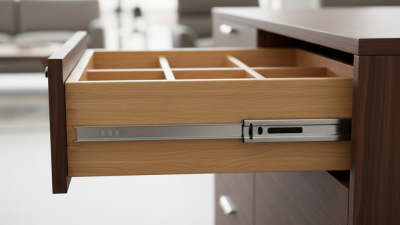
Center mount drawer slides are an essential component for many woodworking projects. They provide a stable, smooth opening mechanism for drawers. Understanding their mechanisms helps you make informed choices. These slides are installed under the drawer, allowing for easy access and a clean look.
According to recent industry reports, center mount slides are favored for their weight capacity. They can typically support loads of 75 to 100 pounds. This makes them suitable for both residential and commercial use. The simplicity of design lends itself to ease of installation. Often, they feature a single rail that keeps drawers aligned, reducing wobbling.
Issues may arise if the slides are not properly aligned during installation. Misalignment can cause drawers to stick or fail to open smoothly. Adjusting the slides requires attention to detail. In some cases, users report that adjusting the tension is necessary to ensure smooth operation. Regular maintenance is also crucial for longevity. Keeping the slides clean can prevent unwanted friction and wear. Proper knowledge of center mount drawer slides ensures that your cabinetry projects achieve both function and aesthetic appeal.
Evaluating Weight Capacity and Size Requirements for Your Drawers
When selecting center mount drawer slides, understanding weight capacity and size requirements is crucial. The weight capacity of the slides determines how much weight your drawers can carry. Choosing slides that match your drawer load is essential for functionality. For example, if you plan to store heavy items, select slides with a higher weight rating. Drawer slides commonly have weight limits that vary from 50 to 200 pounds. Always check this specification carefully.
Size requirements are equally important. Measure the drawer's interior dimensions accurately before selecting your slides. The length of the slide must allow the drawer to open fully without obstruction. A common mistake is underestimating the required length, leading to installation issues. The slide width should also fit your drawer design. Many choose standard sizes without considering custom builds. This oversight can lead to poor performance and frustration.
Evaluate the mounting options too. Some slides require specific clearances for proper function. Ensure you account for these details during your planning phase, as it will save time and effort later. A well-chosen slide not only enhances drawer functionality but also improves overall project quality. Prioritize these evaluations to avoid potential setbacks in your project.
Comparing Material Types: Metal vs. Plastic for Durability
Choosing the right center mount drawer slides is essential for long-lasting and reliable functionality. When comparing materials, metal and plastic are two popular options. Metal slides, typically made from steel or aluminum, offer greater load-bearing capacity and are less likely to warp over time. According to industry reports, metal slides can support weights up to 100 pounds, making them ideal for heavy drawers. However, they can be prone to rust if not properly coated, which is something users must consider.
On the other hand, plastic slides are generally lighter and easier to install. They are less expensive and resistant to corrosion. However, they usually can support lower weights, often around 50 pounds, which may limit their application. A study highlighted that while plastic slides can work well for lightweight drawers, they might not withstand frequent use. This inconsistency can result in a reduced lifespan.
Tips for choosing the right slide include assessing the weight of the contents you plan to store. If the drawer must hold heavy items, metal slides are preferable. Conversely, if you're facing a budget constraint, plastic might suffice for lighter applications. Also, consider the environment—moisture-prone areas are not ideal for metal options. Reflecting on your project's demands will lead to better choices.
Durability Comparison of Drawer Slide Materials
Installation Tips for Center Mount Drawer Slides in Various Settings
When installing center mount drawer slides, precision matters. An accurate measurement ensures that the slides fit snugly and operate smoothly. Use a reliable measuring tool to determine the drawer's depth and width. Industry guidelines suggest maintaining a clear space of at least 1/16 inch between the slides and the drawer sides. Overcrowding can lead to malfunction or wear over time.
Consider the mounting location carefully. The center of the drawer is typically the ideal spot for support. However, not all installations are straightforward. Uneven surfaces can complicate the process. In fact, around 20% of DIY projects report issues due to installation errors, according to recent studies in home improvement. Ensuring that the drawer box is level will enhance the function of the slides and reduce future maintenance.
Stay aware of the load limits specified for the slides. Many slides can handle between 75 to 100 pounds, but installing them improperly can lead to failure under load. Effective weight distribution is crucial. Install additional support brackets if needed. Such adjustments may seem tedious, but they greatly enhance the durability of your drawers. Failure to adhere to these details can lead to frustrating experiences and premature wear.
How to Choose Center Mount Drawer Slides for Your Projects? - Installation Tips for Center Mount Drawer Slides in Various Settings
| Feature |
Value |
Application |
Installation Tip |
| Weight Capacity |
75 - 100 lbs |
Heavy-duty drawers |
Ensure proper alignment for even weight distribution. |
| Material |
Steel, Nylon |
Kitchen, Office |
Choose materials based on usage frequency. |
| Length |
14" - 22" |
Standard drawers |
Measure drawer depth for a perfect fit. |
| Slide Mechanism |
Ball Bearing, Roller |
Smooth sliding action |
Lubricate slides for enhanced performance. |
| Mounting Type |
Center Mount |
Cabinets, Dressers |
Install using appropriate screws for sturdiness. |
Maintenance and Care for Longevity of Drawer Slide Performance
Maintaining drawer slides is crucial for long-lasting performance. According to a recent report by the American Woodworkers Association, regular maintenance can extend the life of drawer slides by up to 50%. This means that proper care is not just an option; it’s a necessity for efficient functionality and user satisfaction.
Cleaning is an essential aspect of upkeep. Dust and debris can accumulate, leading to friction that hampers movement. Cleaning slides with a damp cloth periodically helps eliminate dirt. While this may seem simple, neglecting this step can lead to uneven wear and potential breakage. Proper lubrication is also important. Use a silicone-based lubricant rather than oil, as oil can attract more dust and grime, worsening the issue over time.
It’s also advisable to inspect slides for wear and tear regularly. Slight misalignments can compromise functionality. Consider replacing worn-out parts before they fail completely. A study by the National Hardware Association indicated that proactive maintenance saves costs in the long run by avoiding complete replacements. These practices require attention and diligence, yet they contribute to performance longevity.