Leave Your Message

2026 Top Heavy Duty Aluminum Door Hinges Buying Guide

Choosing the right Heavy Duty Aluminum Door Hinges requires more than checking load capacity. Door size, opening frequency, frame alignment, weather exposure, and maintenance access all affect long-term performance. A hinge that works smoothly on a light interior door may fail early on a busy entrance weighing hundreds of pounds. Small details matter.

Fortune Business Insights’ 2024 Doors Market report estimates the global doors market at approximately USD 147 billion in 2024, with continued growth expected through 2032. This expansion reflects rising demand for durable commercial, institutional, and residential entrance systems. However, broad market growth does not guarantee consistent hinge quality. Buyers must examine material grade, bearing design, screw retention, cycle testing, corrosion resistance, and installation tolerances.

Relevant technical references include ANSI/BHMA A156.1 for butt hinges and EN 1935 for single-axis hinges. These standards help professionals compare durability and load performance. Yet standards are not a substitute for project-specific evaluation. A coastal doorway may need stronger corrosion protection than an indoor warehouse entrance. A school corridor may require higher cycle endurance than a private office.

This 2026 buying guide examines practical selection criteria, including aluminum alloy quality, stainless-steel pins, bearing systems, hinge thickness, and door weight compatibility. It also considers supplier documentation, warranty clarity, and installation support. Some product descriptions remain frustratingly vague. Buyers should challenge unclear ratings before placing an order. The best choice is not always the largest hinge. It is the hinge matched carefully to the door, frame, traffic level, and environment.
2026 Top Heavy Duty Aluminum Door Hinges Buying Guide

What Makes Heavy-Duty Aluminum Door Hinges Different

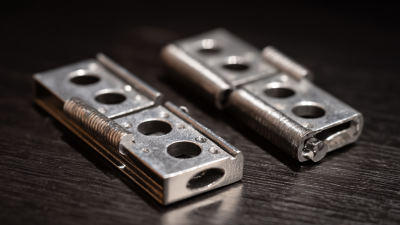
Heavy-duty aluminum door hinges differ from ordinary hinges in more than thickness. Their aluminum alloy bodies resist rust, which helps in coastal entrances, workshops, and humid utility rooms. However, aluminum is softer than steel. A reliable hinge needs reinforced knuckles, accurate pin alignment, and strong bearing surfaces. Load capacity should match the complete door, not just the door leaf. Glass panels, closers, and frequent traffic can increase stress.

During installation checks, I look for smooth movement and even gaps around the frame. A hinge may feel solid in hand but fail when screws pull against weak aluminum or damaged timber. Stainless steel pins and properly sized fasteners often improve service life. Thermal expansion also deserves attention on large exterior doors. I once underestimated seasonal movement, and the closing gap changed noticeably. That experience made me inspect clearances more carefully.

Tips: Check the stated load rating, cycle testing, pin material, and screw compatibility. Measure the door weight with hardware included. Choose adjustable hinges when alignment may change over time. Avoid selecting only by appearance. A polished finish cannot compensate for poor reinforcement, and even experienced installers can overlook frame strength. Reliable buying decisions come from matching the hinge design to the door’s weight, traffic, environment, and installation surface.


Key Specifications for Choosing the Right Door Hinge

2026 Top Heavy Duty Aluminum Door Hinges Buying Guide

Choosing heavy-duty aluminum door hinges starts with the opening, not the catalog. Measure door mass, height, width, thickness, and center of gravity. A tall glass door may stress hinges more than its weight suggests. Specify a tested load rating with a safety margin. Do not treat “heavy duty” as a measurable specification. It is not.

ANSI/BHMA A156.1 provides useful performance benchmarks. Its Grade 1 hinge classification is commonly associated with 2.5 million test cycles. Grade 2 commonly reaches 1.5 million cycles. These figures are laboratory results, not promises for every aluminum door. Confirm whether the supplier tested the complete hinge assembly, including fasteners and frame reinforcement.

Check leaf thickness, knuckle length, pin diameter, bearing design, and screw pattern. For frequent traffic, ball bearings can reduce friction and edge wear. Stainless or protected pins help in humid entrances. Aluminum bodies need compatible fasteners. Mixed metals can create corrosion at the joint.

Look for corrosion data under ASTM B117 salt-spray testing. Hours alone can mislead. The test does not perfectly reproduce coastal air, cleaning chemicals, or trapped moisture. Specify the exposure class, coating type, and maintenance interval. Door sag often begins with weak reinforcement, not a bad hinge. Verify frame anchorage and the hinge-side substrate. Ask for cycle count, static load, adjustment range, and installation tolerances. I would request a sample installation before approving a large order. That step feels slow. It can reveal binding, noise, or poor screw engagement early.

Types of Heavy-Duty Aluminum Door Hinges and Their Uses

2026 Top Heavy Duty Aluminum Door Hinges Buying Guide

Heavy-duty aluminum door hinges are not one universal product. Each type suits a different door weight, opening cycle, and installation condition. Butt hinges remain common for commercial aluminum doors. Ball-bearing versions reduce friction during frequent operation. They work well on entrance doors, service doors, and warehouse partitions.

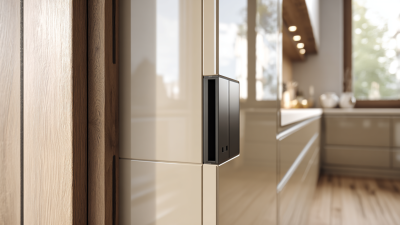
Continuous hinges spread the door load across its full height. This design helps reduce frame twisting and uneven gaps. It suits tall doors, wide doors, and busy corridors. Offset hinges create extra clearance for thick panels or weather seals. Concealed hinges provide a cleaner appearance, but adjustment is less convenient after installation. Spring hinges support self-closing doors, although their closing force must match the door mass.

A 2024 report from the International Aluminium Institute highlights aluminum’s strong use in building systems and its high recyclability. The American Architectural Manufacturers Association also emphasizes tested hardware performance, alignment, and cycle durability in fenestration applications. These findings matter because hinge strength depends on the entire door assembly, not only the hinge body. Aluminum leaves are lightweight, but stainless steel pins and bearing surfaces often improve wear resistance. This point is easy to overlook.

Tips: Check the door weight, width, frequency of use, and frame thickness before ordering. Use at least three hinges on tall or heavy doors. Confirm screw compatibility with aluminum profiles. Field measurements should come first. A beautiful hinge can still fail when the frame flexes.

2026 Top Heavy Duty Aluminum Door Hinges Buying Guide - Types of Heavy-Duty Aluminum Door Hinges and Their Uses

Hinge Type Typical Use Typical Load per Pair* Common Materials and Finishes Main Advantages Best Door Configuration Important Selection Points
Heavy-Duty Butt Hinge Commercial entrances, service doors, utility rooms, and exterior aluminum doors 80–150 kg Aluminum alloy, stainless steel, or plated steel; anodized, powder-coated, or satin finishes Simple installation, easy replacement, good lateral stability, and broad size availability Single-leaf doors with a conventional frame and separate hinge leaves Check leaf thickness, screw pattern, knuckle diameter, clearances, and corrosion exposure
Ball-Bearing Butt Hinge High-traffic commercial doors, building entrances, and doors with closers 100–180 kg Stainless steel or heavy-gauge steel with anodized-look, satin, or powder-coated finishes Reduced friction, smoother operation, and better durability under repeated cycling Heavy single doors, especially when fitted with a door closer Use corrosion-resistant bearings and confirm the hinge is rated for the door closer force
Continuous Hinge High-use entrances, security doors, tall doors, and doors requiring improved alignment 100–300 kg, depending on length and installation Extruded aluminum or stainless steel; mill, anodized, or painted finishes Distributes weight along the full door height, limits sagging, and improves security Tall, wide, or frequently used aluminum doors Measure the full hinge-side height and verify mounting holes, clearance, and frame reinforcement
Spring Hinge Light-to-medium commercial doors, passage doors, and doors requiring self-closing action 45–100 kg Steel or stainless steel body with adjustable spring tension and protective finishes Provides automatic closing without a separate overhead closer Single-swing doors where controlled self-closing is required Confirm closing force, door width, opening angle, and whether one or two spring hinges are needed
Concealed Hinge Architectural aluminum doors, flush entrances, and clean modern interiors 60–120 kg Machined aluminum, zinc alloy, or stainless steel; concealed or matching-color finishes Minimal visible hardware, adjustable alignment, and a streamlined appearance Aluminum doors with compatible reinforced profiles or specialized frames Verify profile compatibility, adjustment range, door thickness, and required machining
Offset or Swing-Clear Hinge Accessible entrances, healthcare facilities, corridors, and doorways needing extra clear width 75–150 kg Stainless steel, steel, or aluminum alloy with satin, polished, or powder-coated finishes Moves the door leaf away from the frame to increase usable opening clearance Wide single doors and openings designed for easier movement or equipment access Check frame projection, door swing, clearance requirements, and accessibility design criteria
Pivot Hinge Large architectural entrances, frameless-style doors, and doors with a distinctive swing path 100–250 kg Stainless steel, aluminum alloy, or reinforced steel with concealed or decorative covers Transfers load through floor and head pivots, allowing wide and visually clean door designs Large, tall, or center-pivot aluminum doors The floor structure, head fixing, pivot location, and door weight must be checked before installation
Lift-Off Hinge Maintenance doors, removable panels, equipment rooms, and service enclosures 50–120 kg Aluminum alloy, stainless steel, or zinc alloy with anodized or protective coated finishes Allows the door leaf to be removed quickly without fully disassembling the hinge Service doors and panels that require regular access Use retaining features where vibration, wind, or unauthorized removal is a concern

*Load guidance: Capacity ranges are typical planning values for a correctly installed pair of hinges. Actual performance depends on door height, width, weight distribution, frame strength, fasteners, cycle frequency, wind pressure, closer force, and the manufacturer’s tested rating. Always select hinges according to the complete door assembly and applicable local building, accessibility, and fire-safety requirements.

How to Compare Materials, Load Capacity, and Durability

Choosing heavy-duty aluminum door hinges requires more than checking a weight label. Aluminum is lightweight, corrosion-resistant, and easy to machine, but alloy selection matters. Extruded 6061 aluminum offers higher strength, while 6063 usually provides better surface finishing. The Aluminum Association’s material data shows aluminum weighs about one-third as much as steel. That advantage reduces door movement stress, but it does not guarantee long hinge life. A stainless-steel pin, reinforced knuckles, and compatible fasteners are equally important.

Load capacity should include the door, glass, closer, panic hardware, and repeated impact. Ask whether the stated rating applies to one hinge or the complete hinge set. There is no universal calculation. ANSI/BHMA A156.1 classifications commonly identify Grade 1 hinges for 2 million cycles, Grade 2 for 1 million, and Grade 3 for 350,000 cycles. These are laboratory results, not promises for every building. Real doors often suffer from misalignment, loose screws, and frame movement.

Durability testing needs careful reading. ASTM B117 salt-spray exposure can compare finishes, but it cannot predict an exact outdoor service life. The International Aluminium Institute reports that recycled aluminum requires roughly 5% of the energy used for primary aluminum production, supporting responsible material selection. In field inspections, finish damage around the knuckle is easy to miss. I have also seen strong hinges fail because installers used incompatible screws. That detail deserves more attention. Examine cycle data, corrosion protection, pin design, adjustment access, and installation tolerances before comparing prices.

Installation, Maintenance, and Long-Term Performance Considerations

Choosing top heavy duty aluminum door hinges in 2026 requires more than checking load ratings. Installation quality often decides long-term performance. Before fitting, verify the door weight, panel thickness, hinge quantity, and frame alignment. Even a strong hinge can bind when the frame is twisted. I have seen this mistake create premature wear within months.

EN 1935 testing classifies hinge durability, with higher grades reaching up to 200,000 opening cycles. This benchmark is useful, but real buildings add dust, vibration, and uneven loading. Select stainless or suitably protected fasteners for the site environment. ISO 9223 corrosion categories can help assess exposure, especially near coastal air or industrial pollution. Clean hinge knuckles with a dry cloth, then apply a compatible light lubricant when movement becomes noisy. Avoid thick grease. It traps grit.

Tips: Use a temporary support under the door during installation. Tighten screws gradually and check the reveal after every adjustment. Inspect loose screws, surface oxidation, and hinge-side sag twice yearly. Record the inspection date. Small records prevent large repairs. I still find that maintenance is delayed until scraping becomes obvious. That approach is costly and avoidable. Replace damaged fasteners instead of forcing them tighter. For high-traffic entrances, compare actual opening frequency with the EN 1935 cycle rating. The rating is not a promise of service life. It is a controlled test result. Consider a margin. Doors rarely operate perfectly.