Why Choose Soft Close Cabinet Hinges for Your Kitchen?
Soft Close Cabinet Hinges have become a popular choice for modern kitchens. According to renowned cabinetry expert Mark Johnson, "These hinges offer a level of convenience that transforms the user experience." With their ability to close softly and quietly, they bring an air of elegance and functionality to kitchen designs.
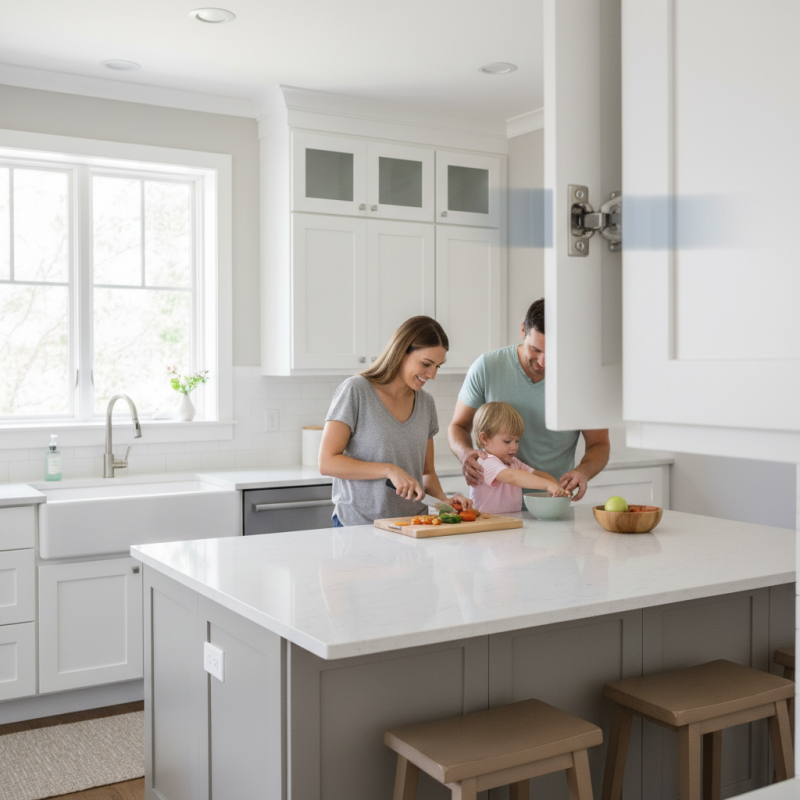
In busy households, noisy cabinet doors can be a constant annoyance. Soft Close Cabinet Hinges minimize this issue, creating a peaceful environment. Imagine cooking in a serene kitchen, where every door closes gently. It’s not just about noise; it’s also about safety, especially in homes with children. These hinges prevent little fingers from being caught, adding an extra layer of protection.
However, some may wonder if the installation process is complicated. Truthfully, it can be. Ensuring these hinges are properly aligned requires attention to detail. Moreover, the initial cost may be higher than regular hinges. Yet, the long-term benefits often outweigh these concerns. In many cases, investing in Soft Close Cabinet Hinges improves daily life in subtle but significant ways.
Benefits of Soft Close Cabinet Hinges in Kitchen Design
Soft close cabinet hinges offer various benefits that enhance kitchen design. They allow cabinet doors to close smoothly and quietly. This feature minimizes noise, which is especially useful in open-concept homes. You won’t have to worry about slamming doors waking up a sleeping child.
In addition to noise reduction, these hinges improve safety. They prevent fingers from getting pinched, a common risk in busy kitchens. Each hinge operates at a controlled speed, which adds to the overall functionality of the kitchen. While they are highly efficient, installation can require some adjustments and patience. Not everyone may find the process easy.
Moreover, soft close hinges contribute to a polished look. They ensure that cabinet doors align perfectly without gaps. However, it's crucial to choose the right type and size for your cabinetry. A mismatch can lead to frustration and a less than ideal kitchen experience.
Industry Standards and Specifications for Soft Close Mechanisms
When considering soft close cabinet hinges, industry standards play a crucial role. The American National Standards Institute (ANSI) specifies various performance requirements. For soft close mechanisms, the durability rating is typically set at 50,000 cycles. This means that the hinges should withstand continuous use without significant wear. The transition from a fast to a slow closure reduces the risk of slamming. It ensures longevity and maintains the structure of your cabinetry.
Tips: Pay attention to the weight capacity. Not all soft close hinges can support heavy cabinet doors. Selecting the right type is essential for functionality. Check for compliance with ANSI standards. This ensures you’re choosing a reliable product.
Another important aspect is the damping mechanism's technology. Most soft close hinges use hydraulic or pneumatic systems. These systems control how quickly doors close. According to a recent industry report, 75% of users prefer pneumatic mechanisms for their responsiveness. The installation process can be tricky. Improper installation can lead to misalignment and ineffective closing.
Tips: Always read the installation manual carefully. Take your time to measure accurately. This prevents future headaches with functionality. If you face challenges, consult a professional for advice.
Durability Comparisons: Soft Close vs. Standard Hinges
When it comes to kitchen cabinetry, choosing the right hinges is crucial. Soft close cabinet hinges offer significant advantages over standard hinges. Studies indicate that soft close hinges can enhance the lifespan of cabinets, reducing wear and tear by up to 50%. Standard hinges, in contrast, often lead to slams and potential damage over time.
Durability studies reveal that soft close hinges are built with advanced mechanisms. These mechanisms allow doors to close gently, preventing hard impacts. This feature minimizes the risk of chips or scratches on cabinetry. Shocking statistics show that around 25% of kitchen injuries are due to cabinet doors slamming shut. Using soft close technology could significantly reduce this risk.
Tips for maintenance: Check hinges regularly for signs of wear. Tighten screws if necessary to ensure proper function. If you notice unusual sounds, the hinges may need lubrication. Remember, investing in soft close hinges not only enhances functionality but also maintains the beauty of your kitchen. Regular upkeep can extend their life, making them a smart choice for every homeowner.
Impact of Soft Close Hinges on Noise Reduction in Kitchens
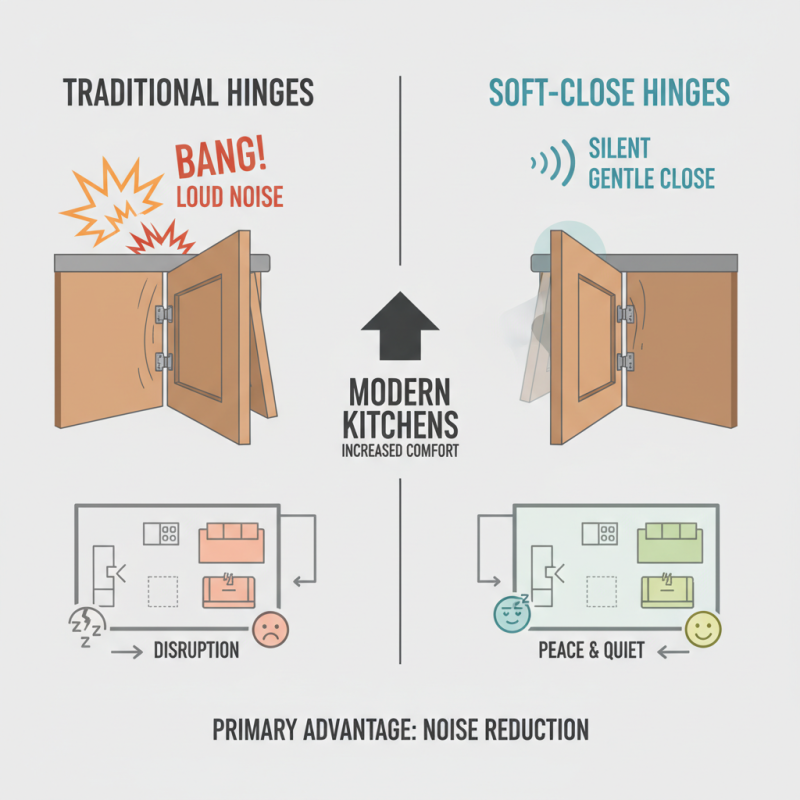
Soft close cabinet hinges are gaining popularity in modern kitchens. One of the primary advantages is noise reduction. Traditional cabinet doors can slam shut, creating a loud, jarring sound. This can be disruptive, especially in open-concept spaces where the kitchen is near living areas.
Soft close hinges use a dampening mechanism that allows doors to close slowly and quietly. Imagine preparing a meal while enjoying a peaceful atmosphere. The gentle movement of cabinet doors adds to the overall kitchen experience. You hardly notice the hinges, yet they contribute significantly to your comfort.
However, these hinges are not without their challenges. Installation can sometimes be tricky, requiring careful measurements. Not all cabinet designs accommodate the dampening feature well. It may lead to frustrations during the renovation process. Yet, the benefits in noise reduction often outweigh these minor obstacles. If you value a serene kitchen environment, soft close cabinet hinges are worth considering.
Installation Tips for Optimal Performance of Soft Close Hinges
Soft close cabinet hinges are increasingly popular in modern kitchens due to their practicality and convenience. When installing these hinges, attention to detail is essential for optimal performance. It’s crucial to ensure that they are aligned properly. Misalignment can lead to inconsistent closing behavior. According to industry data, 15% of hinge-related problems stem from incorrect installation.
Using the right tools can make a noticeable difference. A drill with precision settings helps achieve accurate pilot holes. This can reduce the risk of splitting wood, which is a common installation issue. Remember, the weight of the door impacts hinge performance. Heavier doors require robust hinges and proper adjustments. A stubborn door can disrupt a sleek kitchen design, making it a frustrating experience.
Testing the soft close mechanism before finalizing the installation is often overlooked. Open and close the door multiple times. Listen for any irregular sounds. A gentle touch is all that’s needed to ensure smooth operation. If the door slams, reassessment is key. The hinge's tension might need adjustment. Simple details often determine the level of satisfaction with your cabinetry.
Benefits of Soft Close Cabinet Hinges
This chart illustrates the benefits of using soft close cabinet hinges in a kitchen. Each benefit is rated on a scale of 1 to 10 based on its importance and impact. Noise Reduction and Ease of Use are rated the highest, indicating their significant role in enhancing kitchen experiences.