2026 How to Choose Soft Close Cabinet Hinges for Your Kitchen?
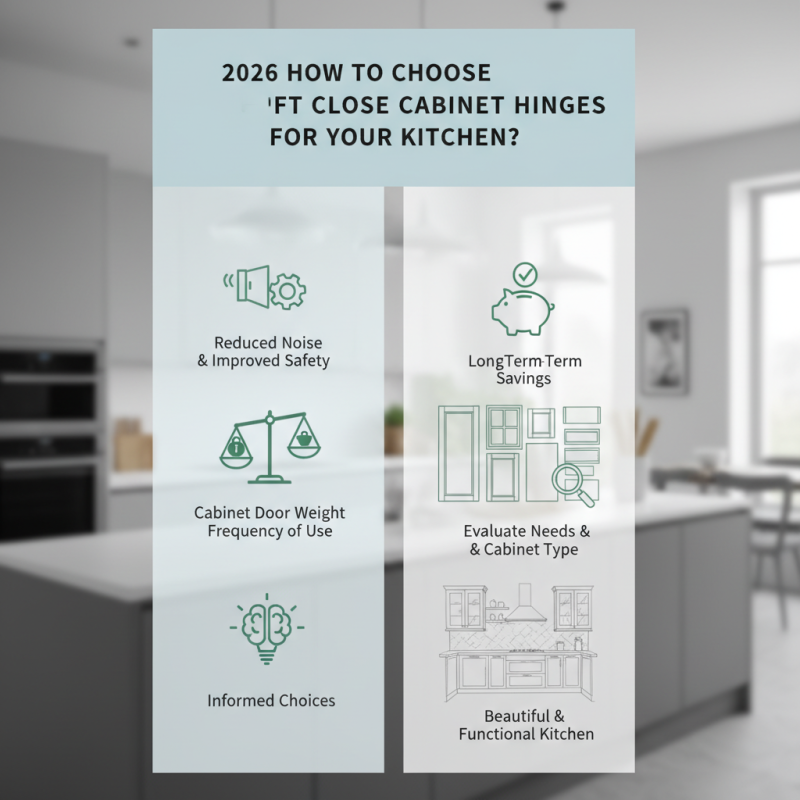
When designing a kitchen, choosing the right hardware is essential. Soft Close Cabinet Hinges can enhance any kitchen's functionality and aesthetics. These hinges provide a gentle, controlled closure, reducing noise and improving safety. They prevent doors from slamming shut, keeping your kitchen peaceful and avoiding potential accidents.
However, selecting the right Soft Close Cabinet Hinges can be challenging. Not all hinges are created equal, and the variety on the market can be overwhelming. You may find it tempting to choose based on price alone. But remember, quality and durability matter. Investing in high-quality hinges can save you time and money in the long run.
Take time to evaluate your needs. Consider the weight of your cabinet doors and the frequency of use. Some designs might not suit every cabinet type. It's important to reflect on what works best for your space. By making informed choices, you can create a kitchen that is both beautiful and functional.
Understanding the Functionality of Soft Close Cabinet Hinges in Kitchens
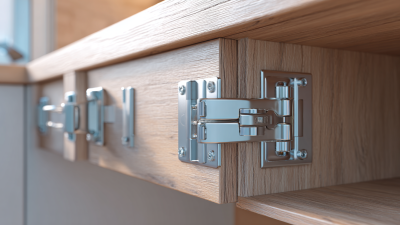
Soft close cabinet hinges offer a wonderful blend of functionality and convenience for your kitchen. They help prevent cabinet doors from slamming shut. This feature minimizes noise, creating a serene cooking environment. These hinges work through a dampening mechanism. When you push the door closed, it slows down, gently securing it in place.
The emotional impact of these hinges should not be overlooked. Imagine preparing dinner and feeling at peace. No loud bangs to disrupt your thoughts. However, choosing the right hinges can be tricky. Not all soft close hinges are created equally. Some may not fit perfectly into your existing cabinets. Others may wear out quickly if not selected wisely.
Consider the weight of your cabinet doors. Heavier doors often require more robust hinges. The finish of the hinge is also important; it should match your cabinetry. Many people overlook this detail, leading to mismatched aesthetics. It's essential to find a balance between functionality and appearance. Taking time to research can lead to a more satisfying renovation experience.
Understanding Soft Close Cabinet Hinges for Kitchens
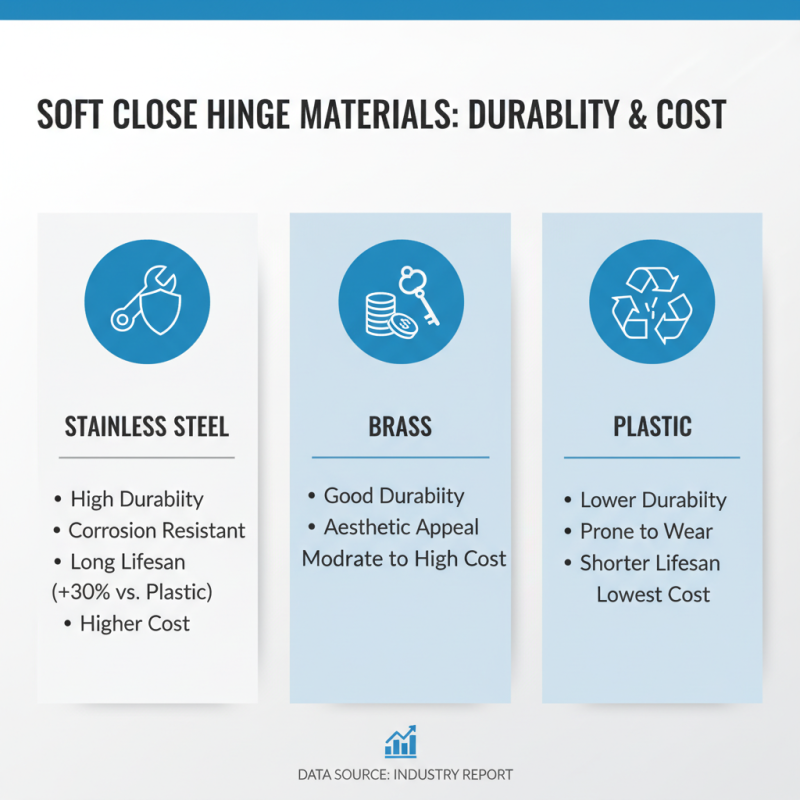
This chart showcases the average durability of different soft close cabinet hinge materials. Steel and brass offer significantly longer lifespans compared to plastic, which has notably lower durability. Understanding these differences can help in selecting the right hinges for your kitchen cabinets.
Key Considerations for Selecting Soft Close Cabinet Hinges: Load and Size
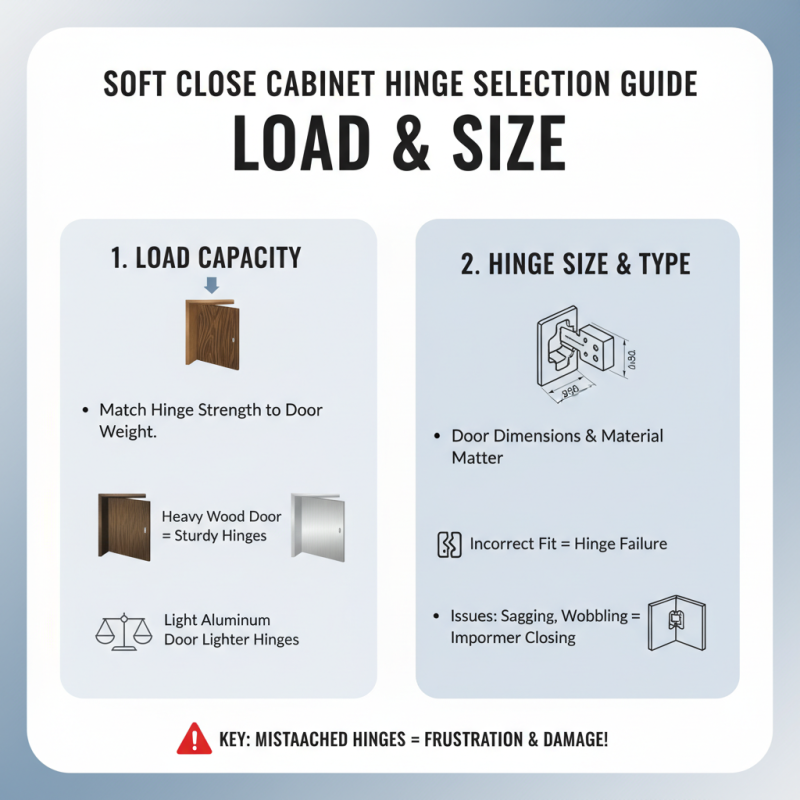
When selecting soft close cabinet hinges, load capacity and size are crucial factors. The hinges must support the weight of your cabinet doors efficiently. Consider the material and dimensions of your doors. A heavy wooden door requires sturdier hinges than a light aluminum one. If your choices don’t match, hinges may fail over time. This can lead to a frustrating experience, with doors that don't close properly or wobble.
Size matters significantly as well. Measure the door thickness and height accurately. Incorrect sizing can lead to misalignment. If the hinges are too small, they won't provide the necessary support. Conversely, oversized hinges can look bulky. Reflect on your kitchen design. Choose hinges that blend seamlessly while ensuring functionality. A fitting design enhances aesthetics, but practicality should never be compromised.
Remember, soft close mechanisms can vary in quality. Test the action of the hinges before purchase. Does it close softly? Does it feel durable? Small details like these are vital for long-term use. A poor choice can lead to dissatisfaction. Pay attention to these aspects, and you’ll create a kitchen that functions beautifully.
Material Choices for Soft Close Hinges: An Overview of Durability and Cost
When selecting soft close cabinet hinges for your kitchen, material choice plays a crucial role in durability and cost. Generally, hinges come in various materials, including stainless steel, brass, and plastic. Stainless steel is known for its strength and resistance to corrosion. Report data indicates that stainless steel hinges last significantly longer than their plastic counterparts. Over a typical lifespan, stainless steel can outperform plastic by up to 30%.
Brass is another popular choice. It offers a blend of aesthetic appeal and strength. However, brass hinges can be more expensive, raising budget considerations. This is where cost versus durability becomes evident. A quality brass hinge might cost twice as much as a plastic one, though it may last three times longer.
While plastic hinges can be cheaper, they often show wear within a few years. They are usually not suitable for heavier cabinet doors, leaving homeowners to reconsider their choices. Reflecting on the long-term implications of hinge material can save you money in the long run. Investing upfront in durable materials can prevent future replacements and repairs, creating a more functional kitchen environment.
Comparative Analysis of Soft Close vs. Standard Hinges: Pros and Cons
When it comes to selecting hinges for kitchen cabinets, the choice between soft close and standard hinges is significant. Soft close hinges gently pull the door shut, preventing slamming. This feature is especially valuable in busy kitchens. The soft close technology provides a quiet and refined experience. You won't have to worry about disturbing anyone while cooking or entertaining.
On the other hand, standard hinges are often more cost-effective. They offer simplicity and ease of installation. However, they may lead to wear and tear over time. The noise from slamming doors can become a nuisance. Many homeowners have found themselves frustrated with this common issue. It’s essential to consider how often you'll use the cabinets and the noise level you’re comfortable with.
Soft close hinges have the advantage of longevity. They tend to last longer than their standard counterparts. Yet, they can be more complex to install. You might end up needing professional help. This can add to your overall budget. Weighing the benefits and challenges of each type is crucial. This ensures you make a decision that fits your needs and lifestyle.
Installation Tips for Soft Close Hinges: Ensuring Optimal Performance and Safety
When installing soft close cabinet hinges, proper techniques can maximize their performance. These hinges are designed to ensure that cabinet doors close quietly and prevent slamming. According to a report by the Kitchen Cabinet Manufacturers Association, up to 75% of homeowners prioritize noise reduction when selecting cabinetry. This makes installation pivotal for enhancing user experience.
Positioning the hinges correctly is critical. The distance from the top and bottom of the cabinet door should be uniform. Experts recommend a 3-inch margin from the edge, allowing for smooth operation. If this distance is inconsistent, the hinge may not function correctly. Additionally, use a level to ensure alignment. An unlevel door can lead to uneven wear on the hinge.
It's also important to consider weight distribution. A door that is too heavy or skewed can compromise hinge performance. Industry data indicates that poor hinge installation accounts for approximately 30% of cabinet issues reported. Regularly check the condition of the hinges. Signs of wear, like difficulty closing or alignment issues, require urgent attention. Neglecting this can lead to more significant problems down the line.
2026 How to Choose Soft Close Cabinet Hinges for Your Kitchen?
| Feature |
Description |
Recommended Size |
Installation Tips |
| Soft Close Mechanism |
Allows cabinets to close slowly and silently. |
35mm for standard cabinet doors. |
Ensure hinge is aligned with cabinet hole for smooth operation. |
| Durability |
Constructed from high-quality materials for longevity. |
Medium to heavy-duty hinges for larger doors. |
Use minimum two hinges per door for stability. |
| Adjustability |
Can be fine-tuned to fit door alignment perfectly. |
Adjustable for both depth and height. |
Check adjustments after installation; make necessary tweaks. |
| Weight Capacity |
Supports various weights depending on hinge type. |
Up to 50 lbs for standard hinges. |
Install vertically for best weight distribution. |