How to Choose the Right Adjustable Hinge for Your Project?
Choosing the right adjustable hinge for your project can be challenging. These small components play a vital role in functionality and aesthetics. High-quality adjustable hinges can make the difference in door movement and overall usability. With various types available, it’s essential to understand which one fits your needs.
Consider factors like material, weight capacity, and adjustment range. Not all adjustable hinges are created equal. Some may offer easy installation but lack durability. Others might be robust but complicated to adjust. Ensure you weigh the pros and cons of each option.
Keep in mind that the right adjustable hinge can enhance your project significantly. However, one size does not fit all. Take the time to assess your requirements. In the end, a thoughtful choice can save you from future frustrations.
Understanding the Basics of Adjustable Hinges and Their Applications
Adjustable hinges are essential components in various projects, providing flexibility in door applications. These hinges allow for precise alignment and easy adjustments post-installation. According to a report by Grand View Research, the global market for adjustable hinges is expected to grow significantly, reflecting their rising importance across multiple industries.
In construction, adjustable hinges are increasingly utilized for doors and gates that need regular alignment. They address common issues like sagging or misalignment, enhancing both functionality and longevity. Data shows that over 30% of door-related service calls stem from alignment issues. By choosing the right adjustable hinge, one can mitigate these problems effectively.
Applications extend beyond doors. Industries rely on these hinges in machinery and cabinetry, where precise movement is critical. For instance, in manufacturing, the wrong hinge choice can lead to operational inefficiencies. A misaligned door can hinder workflow, impacting productivity. Understanding the nuances of adjustable hinges is crucial for ensuring optimal performance in any project.
Factors to Consider When Selecting Adjustable Hinges for Your Project
When selecting adjustable hinges for your project, consider several crucial factors. Load capacity is paramount. According to a recent study, over 40% of hinge failures are due to improper load specifications. Match the hinge's capacity to the weight it will support. A mismatch can lead to functionality issues and safety hazards.
Material choice is another critical aspect. Common materials include stainless steel and zinc-plated steel. Stainless steel offers corrosion resistance. This can be vital in outdoor settings. However, it may be more expensive. In contrast, zinc-plated options are budget-friendly but may corrode over time. Evaluate your project's environment carefully.
Adjustability range is essential too. A hinge with an extensive adjustment range can offer flexibility. This feature is particularly important for doors that require precise alignment. Interestingly, research shows that around 30% of projects underutilize adjustable features. This oversight can lead to misalignment and increased wear. Each project is unique. Reflect on your specific needs, and always choose hinges that enhance functionality and longevity.
How to Choose the Right Adjustable Hinge for Your Project?
| Feature |
Description |
Importance Level |
| Material |
Choose durable materials like stainless steel or brass for longevity |
High |
| Weight Capacity |
Ensure the hinge can support the weight of the door or gate |
Critical |
| Adjustability |
Look for hinges that offer smooth and precise adjustability |
High |
| Size |
Select a hinge size that matches your project specifications |
Medium |
| Installation Type |
Consider whether the hinge will be surface-mounted or concealed |
Medium |
| Corrosion Resistance |
Choose hinges with corrosion resistance for outdoor applications |
High |
| Finish |
Select a finish that matches your overall project aesthetic |
Low |
Comparing Different Types of Adjustable Hinges and Their Features
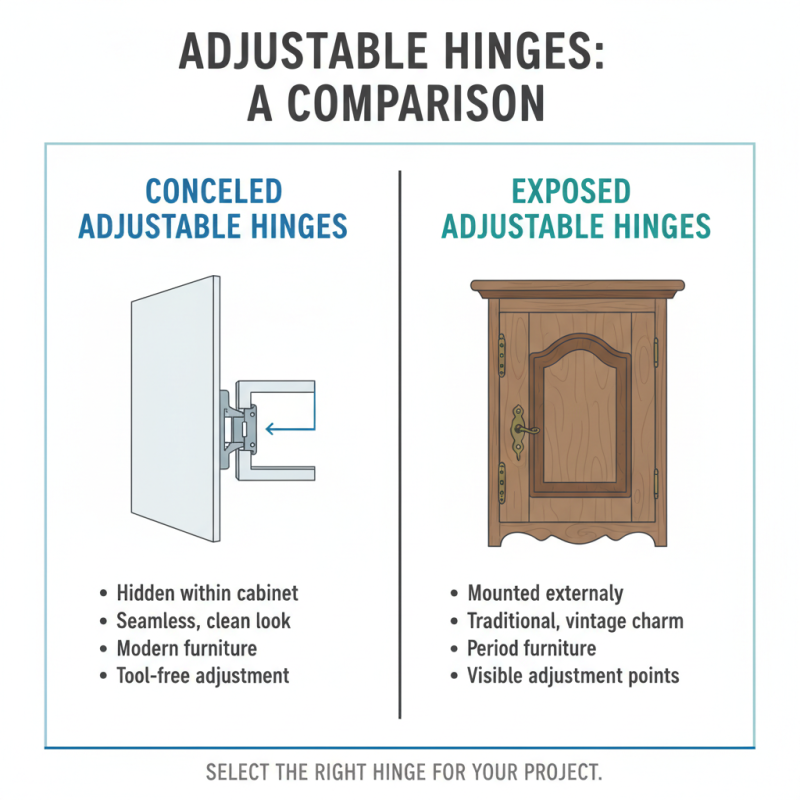
When selecting adjustable hinges, it’s important to understand the various types available. Many options cater to different applications and environments. For instance, concealed adjustable hinges offer a clean look, perfect for modern furniture. These hinges hide inside the cabinet, maintaining a seamless appearance. On the other hand, exposed hinges provide a vintage charm, ideal for traditional designs.
Another significant category is the self-closing hinge. This type closes the door automatically, which can be useful in high-traffic areas. Adjustable weight capacity is crucial for heavy doors and gates. This feature helps manage the stress on the hinge, ensuring longevity. Keep in mind that while some hinges are easy to install, others may require specialized tools. Misalignment during installation can lead to door issues.
Choosing the right hinge involves considering material as well. Stainless steel is robust but can be heavier. Aluminum hinges are lightweight, yet less durable. Remember that the aesthetic is as vital as functionality. Reflect on your project needs and test out different options before finalizing your choice.
Installation Tips for Adjustable Hinges to Ensure Proper Functionality
When installing adjustable hinges, proper functionality relies heavily on correct installation. First, ensure the door is aligned before you start. An uneven door can cause strain on the hinges, leading to premature wear. Use a level to check the alignment. Small adjustments may be necessary at this stage.
A useful tip is to mark your drilling points precisely. Measurements should be taken carefully to avoid mistakes. Drilling holes that are too large or too small can complicate the installation. Additionally, consider the material of your door and frame, as this impacts the type of screws and anchors needed.
Remember to test the hinge functionality after installation. Open and close the door to observe any issues. If it doesn’t swing smoothly, you might need to readjust. Patience is key. Take a step back if things don't go as planned. Adjusting hinges can be tricky, and a second attempt may often yield better results.
Maintenance Advice for Prolonging the Life of Your Adjustable Hinges
Adjustable hinges are crucial in many projects, but they require proper maintenance to ensure longevity. Regular inspections can help identify wear and tear. Check for signs of rust or corrosion. These issues can degrade the hinge's performance over time. Even small defects can lead to larger problems in the future. Cleaning the hinges helps remove dirt and grime, which is essential for smooth operation.
Applying lubricant is another important step. Use a silicone-based or graphite lubricant for the best results. Avoid using excessive amounts, as this can attract more dirt. An occasional tightening of the screws can prevent misalignments and enhance stability. Over time, adjustments may be needed to maintain alignment, which is a frequently overlooked aspect of hinge care.
Consider environmental factors too. Moisture and temperature changes can affect hinges. In humid conditions, they may rust faster. A proactive approach to maintenance often gets ignored, leaving projects vulnerable. Reflecting on past experiences can help you create a more reliable maintenance routine. Keeping adjustable hinges in top shape is a balance of vigilance and care, ensuring they perform optimally when needed most.
Adjustable Hinge Selection Factors
This chart illustrates the importance levels of various factors when choosing adjustable hinges. Weight capacity is the most critical factor, followed by material durability and adjustability range. Installation ease and cost-effectiveness are also considered but have lower importance levels.